
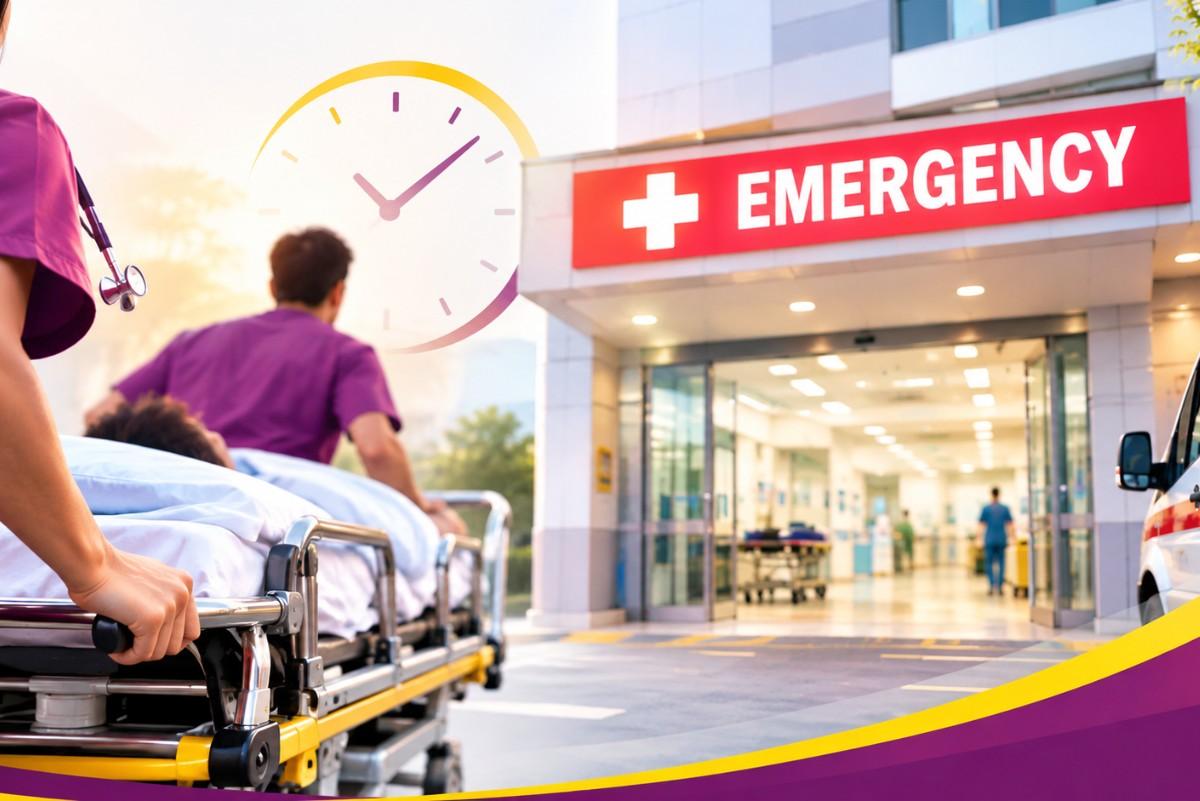
24/7 Emergency Hospital Near Perambur: What to Do in the First Minutes of a Medical Emergency
When a medical emergency strikes, everything happens fast — and the first few minutes often matter more than anything else that follows. Whether it’s a family member collapsing at home, a severe accident on the road, sudden chest pain, or a child struggling to breathe, the panic of not knowing exactly what to do can feel just as overwhelming as the emergency itself. If you’re in Perambur, Kolathur, Ayanavaram, or anywhere across North Chennai and searching for guidance right now, this article is written to help you act quickly, calmly, and correctly.
Knowing what to do in those first critical minutes before reaching a hospital can make a meaningful difference in outcomes. This guide walks you through how to recognise a true emergency, the immediate steps to take before and while heading to care, warning signs that should never be ignored, and what to expect once you reach an emergency hospital near Perambur. This isn’t meant to replace professional medical judgment — it’s meant to help you act with clarity when every second counts.
Recognising a True Medical Emergency
Not every health scare requires an emergency response, but certain signs should never be second-guessed. A true emergency typically involves a sudden, severe change in a person’s condition — not a gradual worsening over days, but something that shifts sharply and dangerously in a short window of time.
Common situations that qualify as medical emergencies include:
- Severe chest pain or pressure
- Difficulty breathing or gasping for air
- Sudden weakness, numbness, or drooping on one side of the body
- Severe bleeding that doesn’t stop with direct pressure
- Loss of consciousness or unresponsiveness
- Severe burns or major trauma from an accident
- Seizures, especially a first-time seizure or one that doesn’t stop
- Signs of severe allergic reaction, including swelling of the face or throat and difficulty breathing
- A high fever in a very young infant
- Severe abdominal pain that comes on suddenly and intensely
If you’re unsure whether a situation qualifies as an emergency, it’s always safer to treat it as one and seek immediate care rather than wait and monitor.
Why Emergencies Feel More Stressful in a City Like Chennai
Living in a busy, densely populated area like Perambur brings specific emergency-response challenges. Traffic congestion can slow down the time it takes to reach a hospital, especially during peak hours. Many households don’t have a clear, pre-decided plan for where to go during an emergency, which means precious minutes are often lost simply deciding what to do. Seasonal factors also play a role — monsoon months bring a rise in accidents on wet roads, along with a seasonal increase in fever-related and respiratory emergencies among children and older adults across North Chennai.
Having a clear mental plan in advance — knowing your nearest emergency hospital, keeping emergency contact numbers saved, and understanding basic first-response steps — removes a layer of panic when a real emergency actually happens.
What to Do in the First Minutes of a Medical Emergency
Stay as calm as possible. Panic slows down clear thinking. Take a breath and focus on the next single step rather than the whole situation at once.
Call for help immediately. Contact emergency services or head straight to the nearest emergency hospital. Don’t spend time trying to diagnose the problem yourself — professional evaluation is what matters most.
Keep the person safe and still. Unless there’s immediate danger (such as fire or traffic), avoid moving someone who has collapsed or been injured, especially if a spinal injury is possible.
Check responsiveness and breathing. Gently check if the person responds to your voice or touch, and observe whether they’re breathing normally.
Apply direct pressure to severe bleeding. Use a clean cloth and steady, firm pressure until help arrives.
Loosen tight clothing around the neck and chest to help with breathing and circulation.
Do not give food, water, or medication unless specifically advised by a medical professional, especially if the person is unconscious or has difficulty swallowing.
Gather essential information while heading to the hospital — what happened, when symptoms started, any known medical conditions, and current medications, if known.
What Happens When You Reach the Emergency Hospital
Upon arrival, patients are assessed quickly based on the severity of their condition — this is known as triage, and it means the most critical cases are seen first, regardless of arrival order. A rapid initial assessment checks vital signs and immediate danger to life, followed by targeted diagnostics such as blood tests or imaging depending on the suspected condition.
At Guru Aadithya Hospital, round-the-clock emergency care is supported by on-site diagnostics and laboratory services, which allows the emergency team to evaluate and begin treatment without the delays that come from needing to transfer patients elsewhere for basic testing. Depending on the diagnosis, treatment may begin immediately in the emergency area, or the patient may be moved for further specialist evaluation and, if needed, continued inpatient care.
Common Causes Behind Medical Emergencies
Emergencies can stem from a wide range of underlying causes, including:
- Cardiac events such as heart attacks
- Stroke, caused by disrupted blood flow to the brain
- Severe infections that escalate rapidly
- Road traffic accidents and trauma
- Severe allergic reactions
- Complications from existing chronic conditions like diabetes or high blood pressure
- Severe respiratory distress, particularly in young children and older adults
- Poisoning or accidental ingestion, especially in young children
Who Is at Higher Risk During Emergencies
Certain groups face a greater risk of medical emergencies and should be especially prepared:
- Older adults, particularly those with existing heart or respiratory conditions
- Individuals with poorly managed diabetes, high blood pressure, or heart disease
- Young infants and children, who can deteriorate quickly during illness
- Pregnant women, who may face sudden complications
- People with known severe allergies
- Individuals with a family history of stroke or cardiac conditions
If you or a family member falls into one of these higher-risk groups, it’s worth having emergency contact details and hospital directions saved and easily accessible in advance.
How Emergency Diagnosis and Treatment Typically Unfold
Diagnosis in an emergency setting moves quickly and in parallel — while one part of the team stabilises the patient, another may already be running diagnostic tests or preparing for a specialist consultation. Treatment decisions are made rapidly based on the working diagnosis, with continuous monitoring to adjust the approach as new information becomes available. This is very different from a routine outpatient visit, where diagnosis and treatment planning typically happen over a longer, more measured timeline.
What Recovery Looks Like After an Emergency
Recovery after an emergency depends entirely on the underlying condition. Some patients are stabilised and can be discharged with clear follow-up instructions the same day, while others require continued inpatient care and monitoring. Regardless of the path, follow-up care is a critical part of full recovery — many complications are prevented not during the emergency itself, but through the consistent follow-up care that happens afterward.
Lifestyle and Preventive Measures to Reduce Emergency Risk
- Keep chronic conditions like diabetes, high blood pressure, and heart disease well managed through regular checkups
- Know your family’s medical history and any relevant allergies
- Keep a written list of current medications accessible for emergencies
- Childproof your home to reduce the risk of accidental poisoning or injury
- Learn basic first-response steps such as how to control bleeding or respond to a suspected stroke
- Save your nearest emergency hospital’s contact details and route in your phone in advance
- Avoid risky behaviours on the road, particularly during monsoon season when accident rates tend to rise
Warning Signs You Should Never Wait On
Certain symptoms should always be treated as a “go now” situation rather than a “wait and see”:
- Sudden facial drooping, arm weakness, or slurred speech — classic stroke warning signs
- Crushing or severe chest pain, especially spreading to the arm, jaw, or back
- Sudden, severe shortness of breath
- Uncontrolled bleeding
- Sudden confusion or loss of consciousness
- A seizure that doesn’t stop within a short time, or a first-time seizure
- Signs of severe allergic reaction with facial or throat swelling
Common Myths vs Facts About Medical Emergencies
Myth: It’s better to drive an unstable patient yourself rather than wait for emergency transport.
Fact: Emergency transport allows care to begin en route and ensures the patient arrives at the right care setting safely — self-transport can sometimes delay critical early treatment.
Myth: If someone seems to “come around” after collapsing, the danger has passed.
Fact: A brief return to alertness doesn’t rule out a serious underlying cause, and the person still needs prompt medical evaluation.
Myth: Giving water to an unconscious person can help revive them.
Fact: This can cause choking or airway blockage — fluids should never be given to someone who is unconscious or not fully alert.
Myth: Mild symptoms can’t be part of a serious emergency like a heart attack or stroke.
Fact: Some serious emergencies present with subtle symptoms rather than dramatic ones, which is exactly why sudden, unusual symptoms should always be taken seriously.
Myth: Emergency rooms are only for life-threatening trauma, not sudden severe illness.
Fact: Emergency care covers a wide range of sudden, severe conditions, including medical emergencies like stroke, severe infections, and allergic reactions, not just physical trauma.
Myth: Waiting to see if symptoms improve on their own is generally the safer choice.
Fact: With true emergency symptoms, time lost waiting can directly affect outcomes — prompt evaluation is almost always the safer path.
The Patient Journey: From Emergency to Recovery
Emergency onset — sudden, severe symptoms appear, requiring immediate attention.
Immediate response — basic first-response steps are taken while arranging transport to the nearest emergency hospital.
Arrival and triage — the patient is assessed quickly based on severity and stabilised as needed.
Diagnosis — rapid diagnostic testing identifies the underlying cause alongside ongoing stabilisation.
Treatment — appropriate emergency treatment begins immediately, with continued care as needed.
Recovery and follow-up — the patient is monitored, discharged when stable, and given clear follow-up instructions to support full recovery.
When Should You Head to the Emergency Room?
If you notice any of the warning signs covered in this guide — chest pain, breathing difficulty, sudden weakness or confusion, uncontrolled bleeding, or loss of consciousness — head to the emergency room immediately rather than scheduling a routine appointment. When in doubt about whether something qualifies as an emergency, it’s always safer to be evaluated promptly than to wait and hope symptoms improve on their own.
Guru Aadithya Hospital’s Approach to Emergency Care
At Guru Aadithya Hospital, emergency care is built around one core priority: acting quickly and calmly when patients and families need it most. As a multispeciality hospital serving Perambur and the wider North Chennai community, the hospital provides round-the-clock patient care supported by on-site diagnostics and laboratory services, allowing the emergency team to assess and begin treatment without unnecessary delays.
Every emergency case is approached individually, with rapid but careful assessment guiding next steps — whether that means immediate stabilisation, specialist consultation, or continued inpatient care. Because emergencies often intersect with other departments, the hospital’s multispeciality structure allows for coordinated care across specialities when needed, without requiring patients or families to navigate multiple separate facilities during an already stressful time.
For residents across Perambur, Kolathur, Villivakkam, Ayanavaram, Vyasarpadi, Periyar Nagar, Purasaiwalkam, Madhavaram, Washermanpet, Otteri, and Jamalia, accessibility during emergencies is treated as a core responsibility, not an afterthought. The goal is straightforward — to be a dependable, close-to-home option families can rely on when every minute matters.