
Introduction
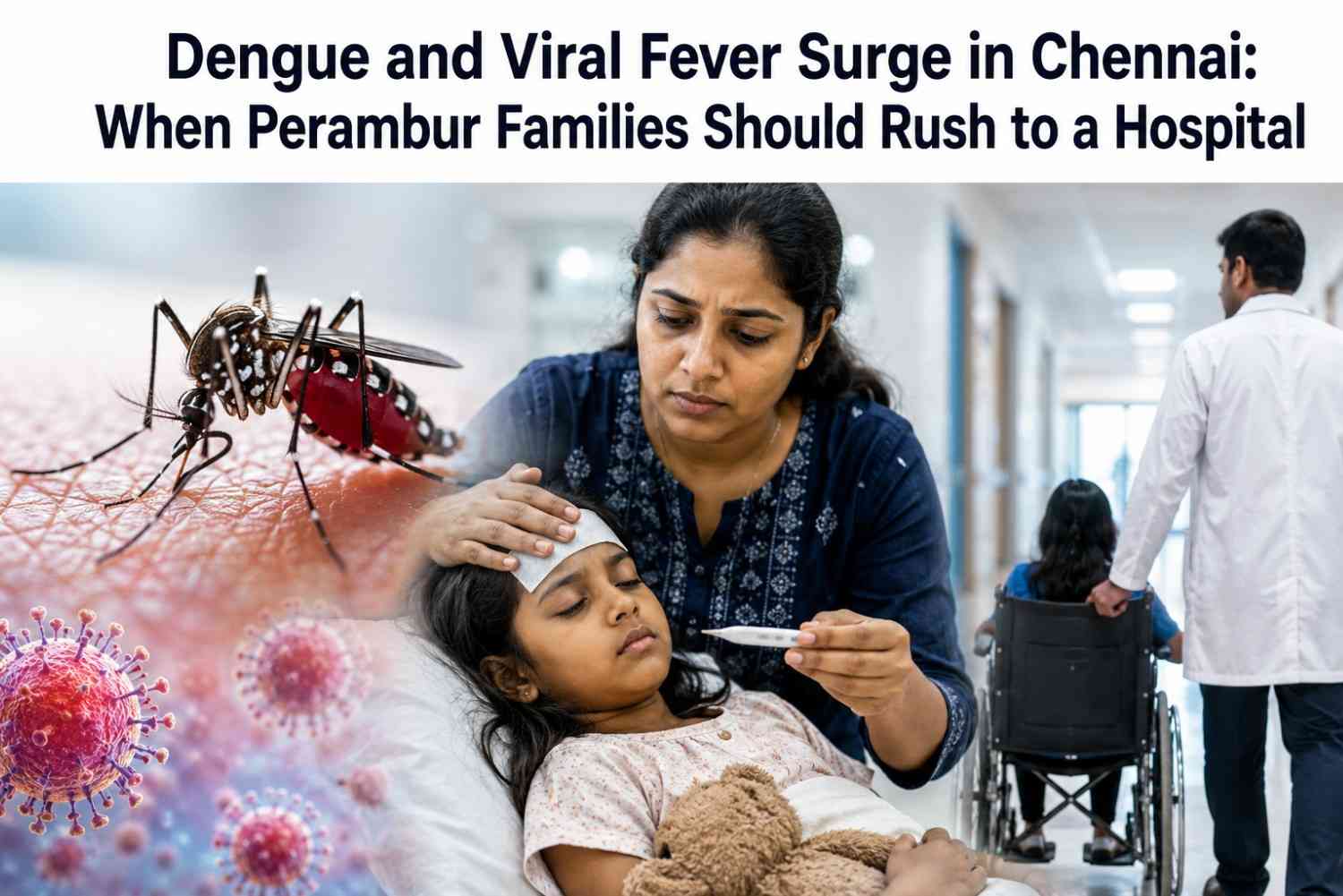
Every year, when the monsoon clouds gather over Chennai, families across Perambur, Kolathur, Vyasarpadi, Madhavaram, and Ayanavaram brace for something beyond the rains — the surge of dengue fever and viral infections that follow. The stagnant water, the rising humidity, and the explosion of mosquito breeding sites turn North Chennai neighbourhoods into seasonal hotspots for some of the most dangerous vector-borne illnesses.
If someone in your family has been running a fever for more than two days, complaining of severe body pain, or showing unusual fatigue, this is not the moment to wait and watch. Knowing when to see a doctor for dengue fever in Chennai — and acting fast — can make a life-saving difference.
This article will help Perambur families understand the warning signs of dengue and viral fever, when to rush to a hospital, what tests and treatments to expect, and how Guru Aadithya Hospital provides reliable, accessible care for North Chennai patients during this critical season.
Why Dengue and Viral Fever Peak Every Monsoon in North Chennai
Chennai’s monsoon season, which runs from June through December, creates ideal conditions for the Aedes aegypti mosquito — the primary carrier of the dengue virus. Areas like Perambur, Washermanpet, Otteri, Jamalia, Periyar Nagar, and Vyasarpadi have densely packed residential streets, older drainage infrastructure, and limited open green spaces. These factors combined mean water stagnates quickly after rains, and mosquito populations multiply rapidly.
Viral fever during this season is not always dengue. It can also be caused by influenza, chikungunya, typhoid, leptospirosis, or other infections. But the challenge for most families is that many of these illnesses present with similar early symptoms — making it difficult to distinguish between a common cold and something that needs immediate medical attention.
This is why timely evaluation by a viral fever doctor in Perambur matters enormously.
Dengue Symptoms You Must Not Ignore
Dengue fever typically appears four to ten days after a mosquito bite. Recognising dengue symptoms during Chennai’s monsoon season early is the first step toward preventing serious complications.
Common Symptoms of Dengue Fever:
Sudden high fever, often reaching 102°F to 104°F, is usually the first sign. This is accompanied by severe headache concentrated behind the eyes, intense muscle and joint pain (which gives dengue its older name “breakbone fever”), nausea and vomiting, skin rash appearing two to five days after fever onset, mild bleeding from the nose or gums, and profound fatigue and weakness.
Symptoms of Severe Dengue (Dengue Hemorrhagic Fever) — Rush to Hospital Immediately:
Severe abdominal pain, persistent vomiting more than three times in a day, rapid breathing, bleeding under the skin appearing as bruise-like patches, blood in urine or stools, cold or clammy skin, and extreme restlessness or drowsiness are all emergency warning signs. If any of these appear, do not wait — head directly to a fever hospital near Perambur without delay.
What Causes Dengue and How It Spreads
The dengue virus is transmitted exclusively through the bite of an infected Aedes mosquito. Importantly, dengue does not spread from person to person through touch, air, or sharing food. However, a single household can have multiple members infected if mosquitoes are breeding nearby.
Viral fevers during monsoon season in Chennai are caused by a wide range of viruses and bacteria spread through mosquitoes, contaminated water, and respiratory droplets. Poor sanitation, open drains, and overcrowded living conditions — common in parts of North Chennai — increase the risk for families in Perambur, Madhavaram, Purasaiwalkam, and Villivakkam.
Who Is at Highest Risk?
While dengue can affect anyone, certain groups face higher risks of serious complications. Children under the age of ten are particularly vulnerable as their immune systems are still developing. Elderly individuals above sixty years often experience more severe illness. People with existing conditions such as diabetes, hypertension, asthma, or heart disease need close medical monitoring. Pregnant women with dengue face risks both to themselves and their unborn child. Anyone who has had dengue before is also at higher risk of severe dengue upon reinfection.
For families in areas like Kolathur, Ayanavaram, and Perambur where multi-generational households are common, protecting both children and elderly members simultaneously during monsoon season becomes critical.
Diagnosis: What Tests Are Required for Dengue?
Early and accurate diagnosis is the cornerstone of effective dengue fever treatment in Perambur and across North Chennai. A trained doctor will begin with a thorough clinical examination followed by targeted laboratory investigations.
Key Diagnostic Tests for Dengue:
The NS1 Antigen Test is the most important early detection tool and gives reliable results in the first five days of fever. The Dengue IgM and IgG Antibody Tests confirm infection after day five. A Complete Blood Count (CBC) is performed daily to track platelet count and white blood cell levels. Liver function tests are done if the patient shows signs of liver involvement. An ultrasound abdomen may be advised to check for fluid accumulation around organs.
Tracking dengue platelet count in a hospital in Perambur with proper monitoring facilities is essential, as a rapidly dropping platelet count signals the need for urgent intervention.
Dengue Treatment: What to Expect
There is currently no specific antiviral drug that cures dengue. Treatment is supportive and focuses on managing symptoms, preventing complications, and ensuring the body recovers safely.
Outpatient Management (Mild Cases):
Patients with mild dengue and stable platelet counts above 100,000 per microlitre can often be managed at home with medical supervision. This involves adequate rest, high fluid intake including oral rehydration solutions, paracetamol for fever and pain relief, and strict avoidance of aspirin and ibuprofen which can increase bleeding risk. Regular follow-up visits with platelet count monitoring every 24 to 48 hours are mandatory.
Hospital Admission (Moderate to Severe Cases):
When platelet counts drop below 50,000, when bleeding symptoms appear, or when the patient is unable to tolerate oral fluids, hospital admission becomes necessary. Intravenous fluid therapy is administered to maintain blood pressure and organ function. Platelet transfusions may be required in severe cases. Continuous monitoring of vital signs and blood parameters is carried out by medical staff.
Choosing the best hospital for viral fever treatment in North Chennai means choosing a facility with round-the-clock diagnostic access, experienced physicians, and the infrastructure to handle both mild and critical dengue cases.
When Should You Rush to a Hospital?
This is the most important question families in Perambur, Kolathur, and Vyasarpadi ask every monsoon season. The general guidance for when to see a doctor for dengue fever in Chennai is as follows.
Visit a doctor within 24 hours if fever has lasted more than two days, if body pain is severe enough to prevent normal movement, if the patient is a child under ten or elderly above sixty, or if there is a known dengue outbreak in your neighbourhood.
Rush to the hospital immediately — do not wait — if fever crosses 104°F, if there is any bleeding from the nose, gums, or under the skin, if the patient vomits blood or passes dark stools, if the patient becomes confused or difficult to wake, if breathing becomes rapid or laboured, or if the hands and feet feel cold while the body is hot.
These are signs of dengue shock syndrome. Every hour matters. Head directly to a fever hospital near Perambur right away.
Myths vs Facts About Dengue Fever
Myth 1: Dengue only affects people living in dirty areas. Fact: Dengue mosquitoes breed in clean, stagnant water too — in flower pots, water tanks, and coolers inside clean homes.
Myth 2: If the fever comes down, dengue is cured. Fact: The most dangerous phase of dengue often begins when the fever drops, typically between day four and day six. Platelet count must still be monitored.
Myth 3: Papaya leaf juice cures dengue. Fact: There is no scientifically proven cure for dengue. Papaya leaf extract may mildly support platelet recovery in some studies, but it does not replace medical treatment or hospital monitoring.
Myth 4: You cannot get dengue twice. Fact: There are four dengue virus serotypes. A second infection with a different serotype carries a higher risk of severe dengue.
Myth 5: Only mosquitoes in the evening transmit dengue. Fact: The Aedes aegypti mosquito is most active during early morning and late afternoon hours, not just in the evening.
The Patient Journey: From Symptoms to Recovery
Step 1 — Symptoms Appear: Fever, headache, body pain, rash emerge within four to ten days of a mosquito bite.
Step 2 — Medical Consultation: Visit a viral fever doctor in Perambur within the first 24 to 48 hours. Do not self-medicate with anti-inflammatory drugs.
Step 3 — Diagnosis: NS1 antigen test and CBC are conducted. Results typically available within a few hours at a hospital with in-house diagnostics.
Step 4 — Treatment Decision: Based on platelet count, severity, and age, the doctor decides between outpatient management or hospital admission.
Step 5 — Monitoring and Recovery: Daily platelet monitoring, fluid intake, and rest form the core of recovery. Most uncomplicated dengue cases recover in seven to ten days.
Step 6 — Follow-Up: A follow-up visit after discharge confirms full recovery and normal blood counts before the patient resumes normal activity.
How to Prevent Dengue This Monsoon Season
Prevention is always better than treatment, particularly for families in densely populated neighbourhoods of North Chennai.
Empty and clean all water-storing containers at least once a week. Cover overhead water tanks completely. Remove any objects around the home that collect rainwater including old tyres, buckets, and flower pot trays. Use mosquito nets, especially for children and elderly family members. Apply mosquito repellent during early morning and evening hours. Wear full-sleeved clothing during peak mosquito activity hours. Participate in your local municipal health drives and fogging exercises.
Community-level vigilance in areas like Perambur, Otteri, Jamalia, and Madhavaram can significantly reduce the spread of dengue each season.
Questions Patients Often Ask But Often Go Unanswered
How long does dengue fever last?
Dengue fever typically lasts between seven and ten days. However, fatigue and weakness can persist for several weeks after recovery.
Can I eat normally during dengue treatment?
Yes. Light, easily digestible meals are encouraged. Staying well-hydrated with water, coconut water, and oral rehydration fluids is particularly important.
Is dengue treatment affordable in Perambur?
Diagnosis and supportive treatment for mild dengue is relatively affordable. Costs increase with hospital admission, IV fluids, and platelet transfusions. Families in North Chennai can inquire about treatment costs in advance at their chosen hospital.
What should I bring when I come to the hospital for fever?
Bring any previous blood test reports, a list of current medications, details of when fever started, and a family member to assist with admission processes.
Can I go back to work after dengue recovery?
Most patients can return to light activity within two weeks of recovery. Physically demanding work should be avoided until the doctor clears you after a follow-up check.
Is there a dengue vaccine available in India?
As of 2025, dengue vaccination is available in India for individuals who have had a confirmed prior dengue infection. Consult your doctor for eligibility and current recommendations.
Guru Aadithya Hospital's Approach to Fever and Dengue Care
At Guru Aadithya Hospital in Perambur, families across North Chennai receive attentive, patient-first care during the monsoon season when dengue and viral fever cases rise sharply. As a multispeciality hospital serving Perambur, Kolathur, Vyasarpadi, Ayanavaram, Madhavaram, Villivakkam, and surrounding communities, the hospital is designed to be accessible precisely when patients need care the most.
The hospital offers 24×7 patient care so families do not have to wait until morning when fever spikes at night. Advanced in-house diagnostics including CBC, NS1 antigen testing, and liver function panels allow rapid results without sending patients to external labs. Experienced general medicine physicians and specialists assess each patient individually rather than applying a one-size-fits-all approach.
When hospital admission is required, patients receive personalised monitoring of platelet count, fluid balance, and clinical status. The multispeciality setup means that if dengue leads to complications involving the liver, kidneys, or cardiovascular system, relevant specialists are available within the same facility.
The focus at Guru Aadithya Hospital is not simply on treating the immediate illness but on educating families about warning signs, prevention measures, and follow-up care — because an informed patient is far better equipped to protect their family through every monsoon season.
If you or anyone in your family is experiencing fever symptoms this season, do not wait for symptoms to worsen. Reach Guru Aadithya Hospital in Perambur today.
📞 Call Now: +91 7358600111
📍 Visit Us: No. 6, Venkatraman St, Perambur, Chennai – 600011
💬 WhatsApp Us for a quick consultation
🗓️ Book an Appointment with our General Medicine or Pediatrics team today
Frequently Asked Questions (FAQ)
The first sign is usually a sudden high fever, often above 102°F, accompanied by severe headache and intense body and joint pain. A skin rash may appear two to four days later.
Rush immediately if there is any bleeding, if the patient becomes confused or difficult to rouse, if fever crosses 104°F, or if vomiting is persistent and the patient cannot keep fluids down.
For patients under outpatient care, platelet count should be checked every 24 to 48 hours. Hospitalised patients may require more frequent monitoring depending on the severity of decline.
Yes. Guru Aadithya Hospital in Perambur provides 24×7 patient care and emergency services, including fever evaluation and diagnostics at any hour.
Yes. Guru Aadithya Hospital in Perambur provides 24×7 patient care and emergency services, including fever evaluation and diagnostics at any hour.
Both cause prolonged fever, but dengue typically presents with severe body pain, rash, and low platelet count, while typhoid more commonly involves abdominal symptoms, a slow heart rate, and a positive Widal or blood culture test. A doctor can differentiate with appropriate tests.
Yes. If you recover from one dengue serotype and are bitten by a mosquito carrying a different serotype, you can be reinfected. This second infection often carries a higher risk of severity.
Families in Perambur, Kolathur, Ayanavaram, Madhavaram, and Villivakkam can access reliable, affordable viral fever and dengue treatment at Guru Aadithya Hospital, a multispeciality hospital in Perambur offering round-the-clock care.