
Introduction
One moment your vision feels normal, and the next, things look hazy, doubled, or oddly dim — and suddenly you’re not sure if it’s just tiredness, your reading glasses acting up, or something that needs urgent attention. For many adults in Perambur and Kolathur, and for the caregivers watching over ageing parents, sudden changes in vision bring a very specific kind of worry: is this an emergency, or can it wait?
Vision changes are often brushed aside longer than they should be, especially among older adults who assume blurred or dim vision is simply “part of getting older.” But some eye symptoms genuinely cannot wait, while others are manageable but still deserve timely evaluation from an eye specialist in Perambur. This guide walks you through the most common causes of sudden vision problems, which symptoms signal a true emergency, what diagnosis and treatment typically involve, and how to know when it’s time to see a doctor rather than wait it out.
Why Vision Changes Deserve Prompt Attention
The eyes are remarkably good at compensating for small changes, which is exactly why many people don’t notice a problem until it has already progressed. A gradual blur might feel like nothing more than eye strain from screens or dim lighting, when it may actually reflect an underlying condition developing quietly in the background.
In North Chennai, several factors contribute to a rising number of adults experiencing vision-related concerns. Extended screen time from work and daily life strains the eyes more than in previous generations. Long, sun-exposed commutes across Perambur, Villivakkam, and Ayanavaram accelerate wear on the eyes over the years. And as the population of older adults across these neighbourhoods grows, age-related eye conditions such as cataracts and other vision changes are becoming an increasingly common reason families seek care — often only once symptoms have become hard to ignore.
Common Symptoms That Signal an Eye Problem
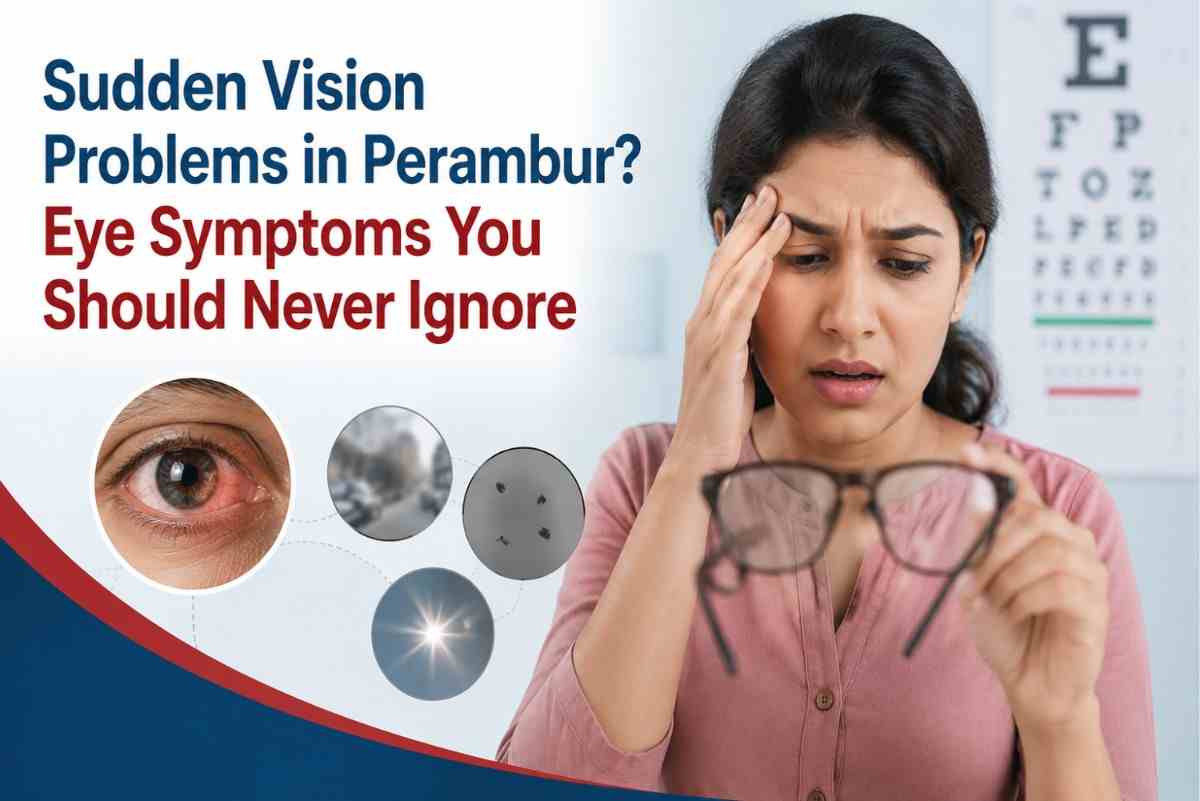
Some symptoms develop gradually, others appear suddenly — both deserve attention, but sudden changes are more urgent:
– Blurred or hazy vision, either in one eye or both
– Difficulty seeing clearly at night or in low light
– Increased sensitivity to bright light or glare
– Seeing halos or rings around lights, especially at night
– Double vision
– Eye pain, redness, or a feeling of pressure
– Sudden flashes of light or an increase in floaters
– A curtain-like shadow appearing across part of your vision
– Difficulty reading, recognising faces, or judging distances
– Watery eyes or persistent discomfort without an obvious cause
Gradual blurring over time is often associated with common, treatable conditions like cataracts, while sudden onset symptoms — especially flashes, shadows, or sudden vision loss — need urgent evaluation.
What Causes Vision Problems in Adults
Vision changes stem from a wide range of causes, some age-related and gradual, others sudden and urgent:
Cataracts — a gradual clouding of the eye’s natural lens, extremely common with age and one of the most frequent reasons older adults in Perambur seek eye care.
Refractive changes — shifts in how the eye focuses light, often correctable with updated glasses or contact lenses.
Diabetic eye changes — patients with diabetes are at higher risk of eye complications that can affect vision if blood sugar isn’t well managed.
Glaucoma — a condition involving increased pressure within the eye that can damage vision gradually, often without early symptoms.
Retinal issues — problems affecting the retina, including detachment, which can cause sudden flashes, floaters, or a shadow across the visual field and require emergency care.
Dry eyes or infections — often causing discomfort, redness, and blurred vision that improves with proper treatment.
Age-related macular changes — affecting central vision, particularly in older adults, and often noticed as difficulty reading or recognising faces.
Risk Factors for Vision Problems
Certain factors increase the likelihood of developing eye conditions and warrant closer monitoring:
– Increasing age, particularly for cataracts and macular changes
– A family history of glaucoma or other eye conditions
– Diabetes or high blood pressure
– Prolonged, unprotected sun exposure over the years
– Smoking
– Prior eye injury or surgery
– Extended, uninterrupted screen use without regular breaks
– Not having had an eye examination in a long time
Caregivers supporting elderly parents should pay particular attention to these risk factors, since many older adults underreport vision changes, assuming they’re a normal and unavoidable part of ageing.
How Eye Problems Are Diagnosed
An eye evaluation typically begins with a discussion of your symptoms and general health history, including any existing conditions like diabetes or high blood pressure that can affect eye health. This is followed by a vision test to assess clarity and sharpness, and a detailed examination of the eye’s structures, including the lens, retina, and optic nerve.
Depending on what the specialist observes, further diagnostic testing may include pressure measurement to check for glaucoma, imaging of the retina, or assessment of the lens if cataracts are suspected. At Guru Aadithya Hospital, patients have access to on-site diagnostics, which allows many of these assessments to be completed during a single visit rather than requiring multiple appointments across different facilities.
Treatment Options for Common Eye Conditions
Treatment depends entirely on the underlying cause identified during diagnosis:
Updated corrective lenses — for many patients, a simple update to glasses or contact lens prescription resolves blurred vision caused by refractive changes.
Cataract surgery — a well-established, routinely performed procedure that removes the clouded natural lens and replaces it with a clear artificial one, typically recommended once cataracts begin significantly affecting daily activities like reading or driving.
Medication or eye drops — used to manage conditions like glaucoma or infections, often as an ongoing part of long-term eye health management.
Diabetic eye management — coordinated care between eye specialists and physicians managing diabetes, since blood sugar control directly affects eye health outcomes.
Emergency intervention — for conditions like retinal detachment, prompt treatment is essential to prevent lasting vision loss.
Understanding Cataract Surgery: What Patients Should Know
Cataract surgery is one of the most common and well-understood eye procedures performed today. It’s typically done on an outpatient basis, meaning most patients return home the same day. The clouded lens is removed and replaced with a clear artificial lens, and many patients notice a meaningful improvement in clarity and brightness of vision within a short period after the procedure. Recovery generally involves using prescribed eye drops, avoiding strain on the eyes for a brief period, and attending follow-up visits to confirm healing is progressing well.
Regarding cost, every patient’s treatment plan is different depending on the specific lens type and any additional eye health considerations, and the hospital’s care team will always walk you through a clear, transparent breakdown of expected costs before any procedure is scheduled — nothing is left as a surprise.
What Recovery Looks Like After Eye Treatment
For most patients undergoing cataract surgery, recovery is relatively swift, with noticeable improvement in vision often apparent within days, and full stabilisation over the following weeks. For conditions managed with medication or eye drops, such as glaucoma, “recovery” is really about long-term stability — consistent use of prescribed treatment to protect vision over the years ahead. Patients recovering from any eye procedure should avoid rubbing the eyes, follow all prescribed eye drop schedules closely, and attend every follow-up appointment, even if vision feels back to normal.
Lifestyle Modifications to Support Eye Health
– Take regular breaks from screens to reduce digital eye strain
– Wear sunglasses that block harmful rays during outdoor activities and commutes
– Keep blood sugar and blood pressure well managed if you have diabetes or hypertension
– Eat a diet rich in leafy greens and foods that support eye health
– Avoid smoking, which significantly increases the risk of several eye conditions
– Ensure adequate lighting when reading or doing close-up work
– Stay well hydrated to reduce dry eye discomfort
Preventive Measures for Perambur and North Chennai Residents
– Schedule a comprehensive eye examination periodically, even without symptoms, particularly after midlife
– Encourage elderly parents to have their vision checked regularly rather than waiting for them to report problems
– Manage underlying conditions like diabetes and high blood pressure proactively
– Protect your eyes from prolonged sun exposure during outdoor work or long commutes
– Don’t delay reporting even mild, gradual vision changes — early detection makes management far easier
Emergency Warning Signs You Should Never Ignore
Certain eye symptoms require immediate medical attention rather than a routine appointment:
– Sudden, significant loss of vision in one or both eyes
– A sudden increase in floaters accompanied by flashes of light
– A shadow or curtain-like effect moving across your field of vision
– Severe eye pain, especially with nausea or vomiting
– Sudden double vision
– Eye injury involving a sharp object or chemical exposure
– Sudden redness with severe pain and vision changes together
If you or a loved one experiences any of these symptoms, seek emergency eye care immediately rather than waiting to “see if it improves.”
Common Myths vs Facts About Eye Health
Myth: Cataracts need to “ripen” completely before surgery is worthwhile.
Fact: Modern cataract surgery doesn’t require waiting until vision is severely affected — treatment is generally recommended once cataracts start interfering with daily activities.
Myth: Reading in dim light will permanently damage your eyes.
Fact: It may cause temporary strain and discomfort, but it doesn’t cause lasting damage to the eyes.
Myth: If you can still see reasonably well, you don’t need an eye exam.
Fact: Many serious eye conditions, including glaucoma, progress silently with little to no early symptoms, which is exactly why routine exams matter even without obvious problems.
Myth: Vision changes in older age are simply unavoidable and not worth treating.
Fact: Many age-related vision changes, including cataracts, are highly treatable, and addressing them can meaningfully improve quality of life.
Myth: Wearing glasses makes your eyesight progressively weaker over time.
Fact: Glasses correct vision for comfort and clarity; they don’t cause your underlying eyesight to deteriorate further.
Myth: Eye problems in diabetics only matter once vision is already affected.
Fact: Diabetic eye changes can begin silently long before vision is noticeably affected, making regular screening essential for anyone managing diabetes.
The Patient Journey: From Symptoms to Recovery
Symptoms appear — blurred vision, glare sensitivity, floaters, or other changes begin to affect daily activities.
Initial assessment — you consult an eye specialist who reviews your symptoms and overall health history.
Diagnosis — a detailed eye examination and relevant diagnostic testing identify the underlying cause.
Treatment — depending on the diagnosis, your specialist recommends corrective lenses, medication, or a procedure such as cataract surgery.
Recovery — you follow the prescribed care plan, whether that’s a brief recovery period after a procedure or ongoing management for a ongoing condition.
Follow-up — regular reviews confirm your eye health remains stable and catch any new changes early.
When Should You Visit a Doctor?
If you notice blurred vision that doesn’t improve, increasing difficulty with night driving, sensitivity to light, or any of the emergency warning signs listed above, it’s time to schedule an eye evaluation. For caregivers, if an elderly parent seems to be squinting more, holding reading material unusually close, or avoiding activities they used to enjoy like reading or watching television, these subtle behavioural changes are often a sign it’s time for an eye checkup, even if they haven’t complained directly.
Questions Patients Often Ask But Competitors Miss
Increased glare sensitivity in bright light can be an early sign of cataracts and is worth mentioning during an eye examination rather than simply switching to darker sunglasses.
Most patients are advised to arrange for someone else to drive them home on the day of the procedure, since vision can be temporarily affected immediately afterward.
Depending on the type of artificial lens used, some patients still need glasses for certain activities like reading, while others require minimal correction — your specialist will discuss this based on your specific case.
Gradual changes over months are usually less urgent than sudden onset symptoms like flashes, shadows, or rapid vision loss, which should prompt an immediate visit rather than a routine one.
Yes, consistent blood sugar control significantly reduces the risk of diabetes-related eye complications over the long term.
Most patients resume light daily activities quickly, but strenuous activity and eye strain are usually restricted for a short recovery period as advised by your specialist.
Guru Aadithya Hospital's Approach to Eye Care
At Guru Aadithya Hospital, eye care is approached with the same patient-first philosophy that shapes every department across the hospital. As a multispeciality hospital serving Perambur and the wider North Chennai community, the hospital brings ophthalmology together with on-site diagnostics and coordinated specialist support, so patients — particularly older adults and those managing conditions like diabetes — don’t have to navigate multiple facilities for connected care.
Every patient’s treatment plan is built around their individual eye health needs, whether that means updated corrective lenses, ongoing management of a chronic eye condition, or a procedure such as cataract surgery. Advanced diagnostics support accurate, timely evaluation, while preventive healthcare is encouraged as a routine part of eye care, not something reserved only for when symptoms become severe.
For families across Perambur, Kolathur, Villivakkam, Ayanavaram, Vyasarpadi, Periyar Nagar, Purasaiwalkam, Madhavaram, Washermanpet, Otteri, and Jamalia, accessibility is central to how the hospital approaches care — including for caregivers researching options on behalf of elderly parents who may be reluctant to seek help on their own. The goal is straightforward: help patients protect and preserve their vision through timely, transparent, and personalized care.
Take the Next Step for Your Eye Health
If you or a loved one has noticed any of the vision changes covered in this guide, don’t wait for things to get harder to see clearly.
Book an Appointment with an eye specialist at Guru Aadithya Hospital today.
Call Now to speak directly with the hospital’s patient care team.
WhatsApp Us for quick, convenient appointment scheduling from your phone.
Request a Doctor Consultation to get a personalized eye health assessment.
Schedule a Health Checkup to catch vision changes before they progress.