
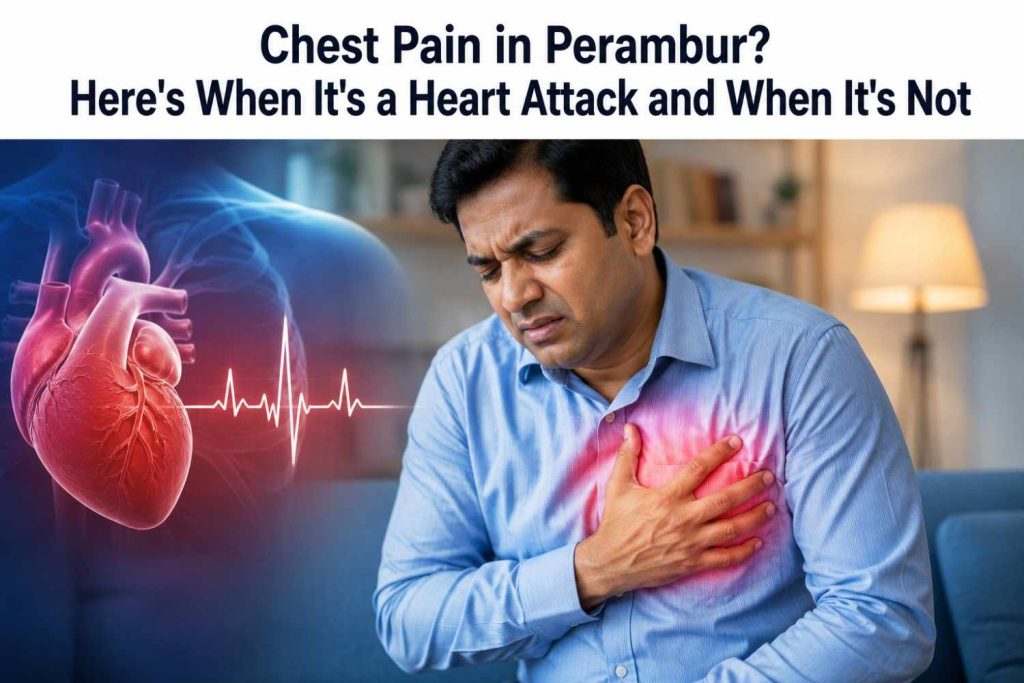
Chest Pain in Perambur? Here’s When It’s a Heart Attack and When It’s Not
Introduction Chest pain is one of the most frightening symptoms a person can experience. Whether it strikes at two in the morning or in the middle of a busy workday in Perambur, the first thought that rushes through most minds is the same — is this my heart? The honest answer is that chest pain can come from many different sources. It can be a sign of a heart attack. It can also be caused by gas, acidity, a muscle pull, anxiety, or a lung-related problem. The challenge is that distinguishing between these causes without a medical evaluation is dangerous — because when it is a heart attack, every single minute counts. For adults above the age of 35 living in Perambur, Kolathur, Ayanavaram, Madhavaram, Vyasarpadi, and surrounding North Chennai neighbourhoods, particularly those managing diabetes, hypertension, or high cholesterol, knowing how to respond to chest pain can be the difference between a full recovery and a life-altering event. This article will help you understand the key differences between cardiac and non-cardiac chest pain, identify the warning signs that demand immediate action, and know exactly when to reach a chest pain doctor in Perambur without hesitation. Why Chest Pain Demands Immediate Attention in North Chennai Cardiovascular disease is one of the leading causes of death among urban adults in Tamil Nadu. In densely populated North Chennai neighbourhoods like Perambur, Washermanpet, Otteri, Jamalia, and Periyar Nagar, lifestyle factors including high-salt diets, sedentary work, stress, and limited access to preventive cardiac care increase the risk significantly. The problem is that many adults in this region either delay seeking care because they assume the pain will pass, or they cannot quickly identify a reliable cardiology facility close to home. Both situations lead to dangerous outcomes when the cause turns out to be cardiac. Finding a cardiologist near Perambur quickly during a chest pain episode should never be a question. It should be a decision already made. Heart Attack Symptoms in Chennai: What They Actually Feel Like Understanding heart attack symptoms in Chennai and across urban India requires going beyond the textbook description. Many patients — particularly women and those with diabetes — experience heart attacks without the classic crushing chest pain. Classic Heart Attack Symptoms: A heavy pressure, squeezing, or tightness in the centre or left side of the chest is the most recognised symptom. This pain or discomfort may radiate to the left arm, jaw, neck, back, or upper abdomen. It is typically accompanied by breathlessness even without physical exertion, sweating that comes on suddenly without obvious reason, nausea or vomiting, a feeling of extreme unease or impending doom, and dizziness or light-headedness. Less Recognised Heart Attack Symptoms (Do Not Ignore These): Pain that feels more like indigestion or heartburn, unexplained extreme fatigue lasting several days before any obvious chest symptoms, discomfort in the upper back between the shoulder blades, shortness of breath without any chest pain at all, and a cold, clammy feeling with pale skin are all presentations that patients and even some families dismiss as minor. If any combination of these symptoms appears — especially in someone above 40 with known risk factors — do not wait. Seek emergency cardiac care in North Chennai immediately. Chest Pain vs Gas Pain: How to Tell the Difference This is one of the most searched questions among patients across Perambur and Chennai, and it deserves a clear, direct answer. Chest pain that is more likely cardiac: It feels like pressure, squeezing, heaviness, or tightness rather than a sharp or stabbing sensation. It does not change when you change body position. It does not improve with burping, antacids, or passing gas. It may worsen with physical activity or emotional stress. It radiates to the arm, jaw, or back. It is accompanied by sweating, breathlessness, or nausea. Chest pain that is more likely non-cardiac (gas, acidity, or muscular): It is sharp, stabbing, or burning in nature. It improves noticeably after burping, passing gas, or taking an antacid. It worsens when you press on a specific spot on your chest wall. It changes with changes in posture or breathing. It is accompanied by bloating, belching, or a sour taste in the mouth. However, here is the critical point — even experienced doctors require an ECG and blood tests to confirm whether chest pain is cardiac or not. Self-diagnosis based on symptom feel alone is unreliable and dangerous. If there is any doubt, visit a chest pain doctor in Perambur the same day. Common Causes of Chest Pain That Are Not Heart Attacks Understanding non-cardiac causes of chest pain helps reduce panic while reinforcing the importance of getting a proper diagnosis. Gastroesophageal Reflux Disease (GERD) and Acidity: Stomach acid flowing back into the oesophagus creates a burning sensation in the chest that can feel alarmingly similar to cardiac pain. This is extremely common in North Chennai adults given dietary habits. Costochondritis: Inflammation of the cartilage connecting the ribs to the breastbone causes chest wall pain that worsens with touch or deep breathing. It is not dangerous but requires evaluation to rule out cardiac causes. Anxiety and Panic Attacks: Anxiety-related chest tightness, rapid heartbeat, and breathlessness can closely mimic heart attack symptoms. Emotional or work-related stress — common in working adults in urban Perambur — is a frequent trigger. Pleuritis or Pulmonary Causes: Inflammation of the lining around the lungs, pneumonia, or pulmonary embolism (blood clot in the lungs) can all cause chest pain. A pulmonologist assessment may be required alongside cardiac evaluation. Muscle Strain: Heavy lifting, poor posture, or physical overexertion can cause chest muscle pain, particularly in labourers and individuals who engage in intense physical activity. None of these conditions should be self-managed without a proper diagnosis from a qualified doctor. Who Is at Highest Risk of Heart Attack in Perambur and North Chennai? Adults above 35 years with any of the following risk factors require both regular cardiac check-ups and immediate evaluation whenever chest pain occurs. High blood pressure or hypertension is one of